You've onboarded 40 customers. Every one felt slightly different. Time-to-value varied by weeks. Nobody really knows why, because nobody tracked the same milestones, in the same order, with the same definition of 'done.'
That's not a CS problem. It's a structure problem. When onboarding lives on a project board, ownership stays implicit, so the moment someone leaves or gets pulled onto a fire, no one is sure who owns what. Add latency at every handoff and you get exactly the variance your NRR data is showing.
Treat onboarding as an operational workflow: explicit owners, timing tied to milestones, and escalation that fires before things are already late. Not after a customer emails to ask what's happening.
Run onboarding as a workflow, not a board
Cadenio gives every onboarding milestone a named owner, fires escalation before the SLA slips, and records evidence at each gate. Your first onboarding Flow is ready in minutes.
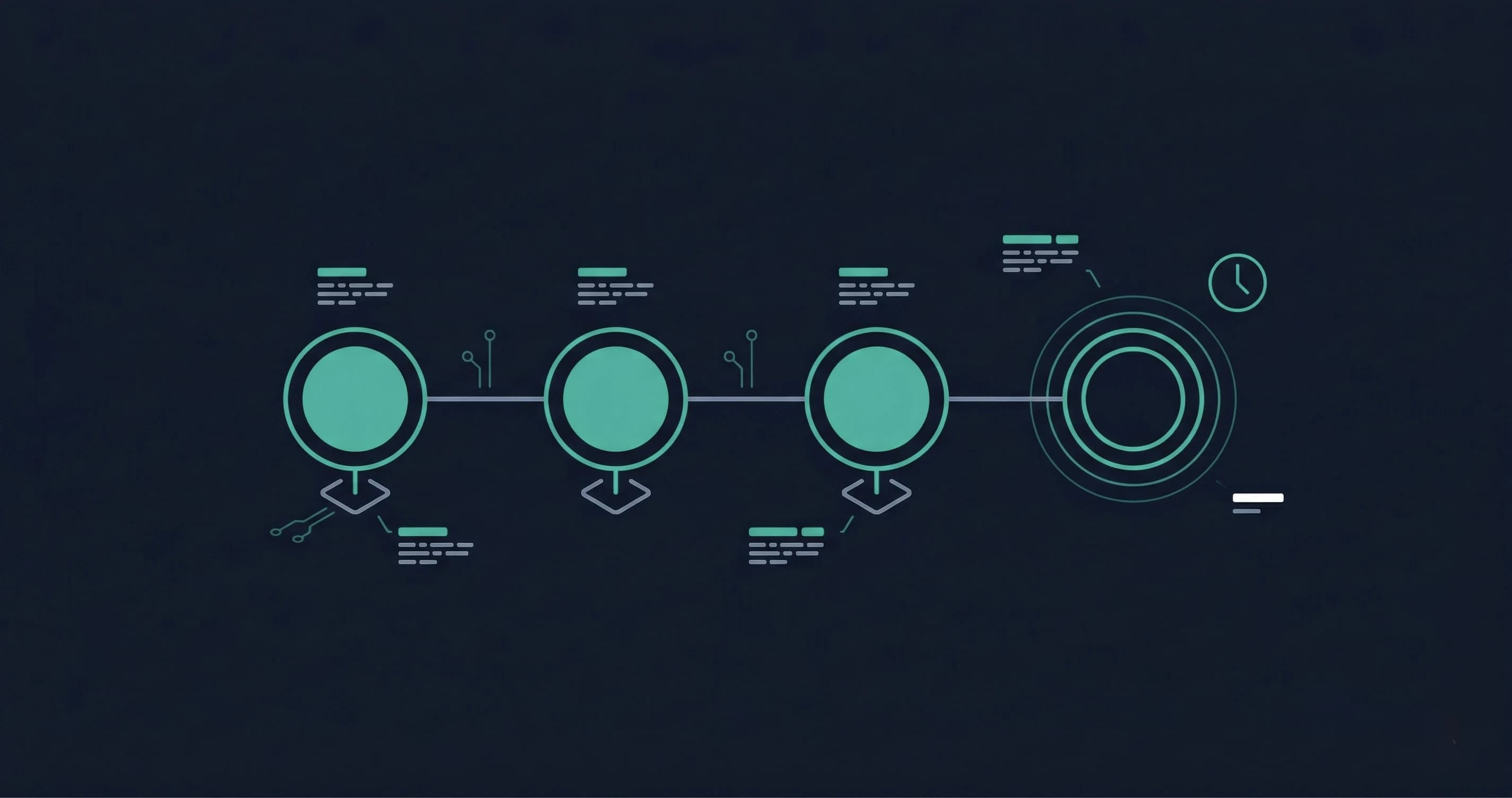
Start free, no credit cardFour checkpoints matter most: kickoff, technical setup, user training, and go-live sign-off. Each one needs a named owner and a target date. If setup stalls because the customer hasn't shared credentials, that should trigger an alert, not a mental note that gets forgotten over the weekend.
Evidence at milestone close is the piece most teams skip. Notes from a call don't count. Validated setup does. Stakeholder sign-off does. This isn't bureaucracy, it's how you stop end-of-onboarding surprises where nobody agrees what 'complete' means.
“Notes from a call don't count. Validated setup does.”
When the baseline is consistent, outliers surface fast. That's when your retrospectives get useful, and your expansion conversations stop starting from scratch.