Overview
Most operations leaders comparing workflow automation software vs project management software end up paying for the wrong tool, and don't realize it until an audit, a missed step, or a recurring fire drill exposes the gap. There's a version of this that most operations teams recognize: someone duplicates a project template at the start of each month, manually reassigns the tasks, resets the deadlines, and tries to remember which steps need approval before anything moves. It works, until one step gets missed, one approval goes undocumented, or one audit asks for a record nobody captured. The tool isn't broken. It's just being used for the wrong job.
Project management is designed for one-time, goal-driven work with a defined end state. Building a product feature. Running a marketing campaign. Migrating a database. The work has a start, an end, and a set of milestones in between. Once the project ships, the work is done and the tracker is archived. Project tools like GoodDay, Asana, Monday and Jira are excellent at this, and Cadenio now runs this kind of work too, on Kanban project boards with owners, deadlines, and an audit trail, so you're not choosing between governance and project flexibility.
Workflow management is designed for recurring, process-driven work that never ends. Onboarding every new client. Running compliance controls every month. Reviewing vendors every quarter. The work repeats at regular intervals, with the same structure every time. What changes is the content, the participants, and the outcomes, not the shape of the work. This kind of work doesn't fit into project timelines because it has no end date.
Run projects and processes without switching tools
Cadenio gives you Kanban project boards and native recurring Flows in one platform, with owners, approvals, and an audit trail on every card and every run.
Try it free for 14 daysThe practical consequence of using a project tool for recurring workflows is this: every time the workflow needs to run, someone has to manually recreate the structure, reassign tasks, reset deadlines, remember which steps need approval. That manual recreation is where steps get missed. And when steps get missed in recurring workflows, the failure is usually invisible until it surfaces in an audit finding or a customer complaint.
“Missed steps in recurring work don't surface in the tool. They surface in the audit.”
The clearest signal that your team is using the wrong tool is this: you have a 'template project' that you duplicate every time a workflow needs to run. If you're duplicating a project template manually, you're working around a limitation that a workflow management tool would eliminate, native recurrence, automatic assignment, structured handoffs, and a compliance record at the end of each run.
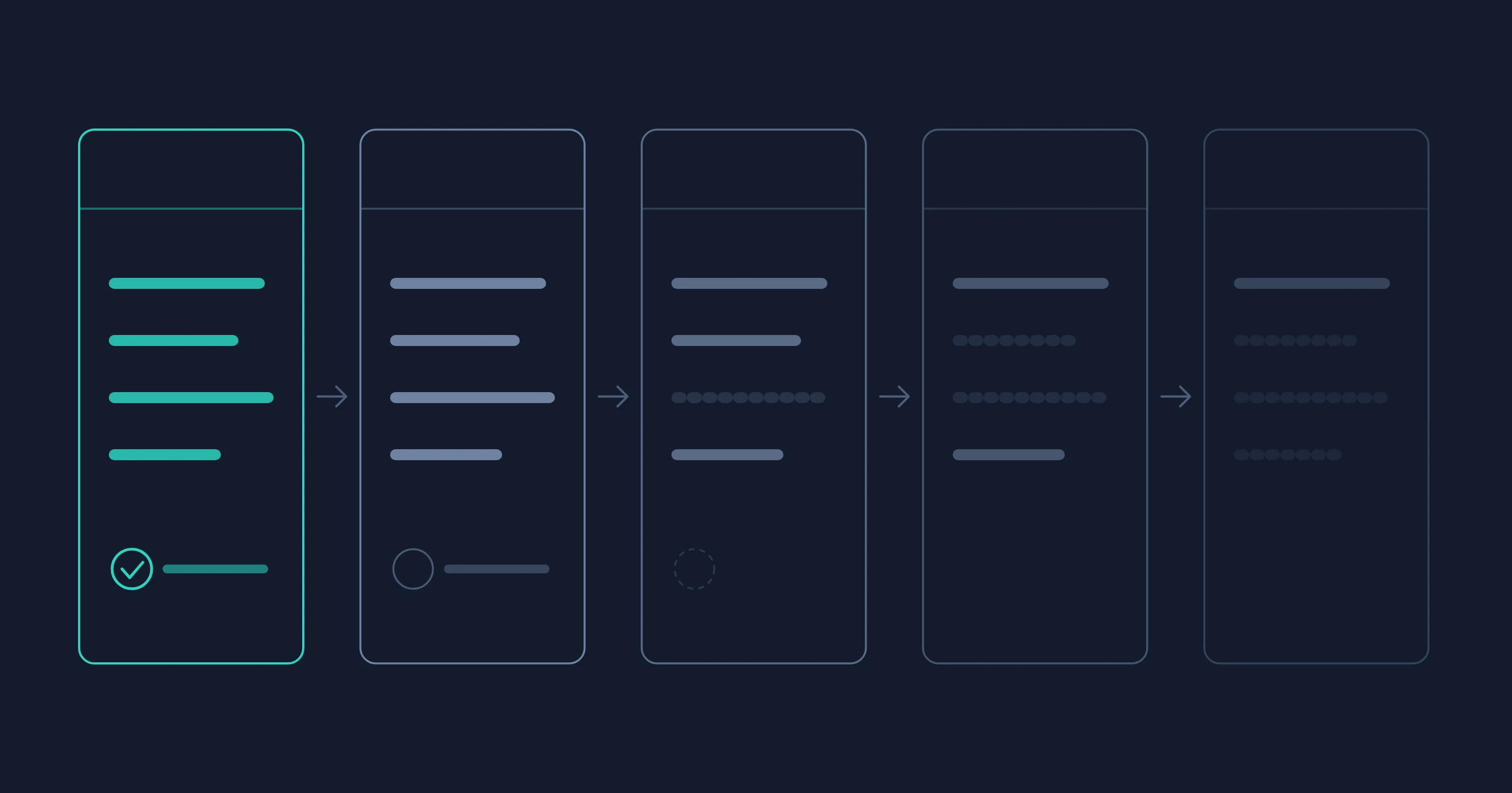
The rule of thumb: use project management for work that is novel, deadline-driven, and temporary. Use workflow management for work that is repeatable, process-driven, and ongoing. Most operations teams need both. The mistake is using one for both jobs, or running them in two disconnected tools with no shared governance. Cadenio runs both under one platform: Kanban boards for project work, recurring Flows for process work, and you can attach a Flow to a project card when one workstream needs both.
Five signs your team is using the wrong tool
- 1
You have a 'template project' that someone duplicates at the start of every cycle
Duplication is a workaround. In a workflow management tool, the same work launches automatically, with the correct assignees, deadlines, and approval gates populated from the template. If you're copying and pasting structure every time, you're managing recurring work with a one-time project tool.
- 2
You can't answer 'who approved step 3 in the March run?' without digging through email or Slack
Project management tools track task completion, not approval history. Workflow management tools produce an immutable record of who signed off on what, at which step, at what time. If your tool can't answer that question in under 30 seconds, it's not built for recurring process accountability.
- 3
Compliance or QA reviews require manual evidence collection before every audit
When execution happens in a project tool, evidence is scattered across comments, attachments, and status updates. Reconstructing it is a manual job. In a workflow management tool, evidence is collected at each step as part of the execution itself. The audit package is a byproduct of running the process correctly.
- 4
Recurring work gets dropped when the person who usually manages it is out
Project tools are personal-effort-driven. Someone has to open the template, duplicate it, assign it. Workflow management tools run on schedule regardless of who's available. The process fires because the calendar says so, not because someone remembered.
- 5
You have no visibility into whether a recurring process has run at all this cycle
In a project tool, a process only exists as a project if someone created it. In a workflow management tool, every missed launch is a visible gap in the run history. You can see not just what ran and when, but what should have run and didn't.
What to look for in workflow management software
Native recurrence is the first requirement. The tool should launch a new workflow run on a schedule, monthly, quarterly, on a specific date, or triggered by an event, without manual intervention. If launching a new cycle requires human action, the tool is not workflow management software; it is a project tool with a copy function.
Role-based assignment matters more than named assignment. Recurring workflows change participants. The compliance manager who ran the Q1 access review may not be available for Q2. The tool should assign tasks to roles and resolve those roles to the current occupants at launch time. Named assignment requires manual updates every cycle.
Structured approval gates separate workflow management from task management. An approval gate is not a task with a 'review' label. It is a system-enforced checkpoint: the next step cannot start until the gate is explicitly cleared by a designated approver. In a tool without structured gates, approvals happen in Slack or email, outside the record.
Per-run audit trails are non-negotiable for compliance use cases. Every run should produce a timestamped record: who completed each step, when, with what evidence attached, and whether any step was returned, escalated, or overridden. That record should be retrievable without involving the people who ran the process, and it should be immutable after the fact.
How mature operations teams use both tools together
The separation that works: project management for everything novel, workflow management for everything recurring. New product launches, one-time migrations, and ad hoc cross-functional initiatives stay in the project tool. Monthly close, quarterly compliance controls, client onboarding, and vendor reviews move to the workflow layer. The dividing line is whether the work has a defined end date and a unique shape, or repeats on a cycle with a consistent structure.
The integration point is handoff. When a project milestone triggers a recurring process, the project tool tracks the trigger and the workflow tool picks up the execution. A product launch completes in Jira. That completion triggers a post-launch review workflow in the workflow tool. The project tracks what shipped; the workflow tracks whether the launch procedures were followed and who approved what.
The mistake teams make when adopting both is trying to synchronize them bidirectionally. Bidirectional sync creates maintenance overhead that cancels the productivity gain. The cleaner model: project tools own project state, workflow tools own process records. They inform each other at defined handoff points, but each tool is the system of record for its own domain. When an auditor asks for evidence of a recurring control, the workflow tool is the source. When a stakeholder asks about project status, the project tool is the source.
A simpler alternative for teams that don't want to maintain two systems: run both inside one platform. On a Cadenio project board, most cards are one-off tasks, but any card can be an attached Flow instead, a purchase approval, a compliance review, a recurring control. The board shows progress; the Flow enforces its own steps and audit trail. No handoff, no sync, one governance model and one audit trail across both project and process work.
| Dimension | Project management | Workflow management |
|---|---|---|
| Nature of the work | One-off | Recurring |
| When it finishes | Archived on delivery | Starts again |
| Structure each cycle | Rebuilt by hand | Defined once |
| Assignment | Manual | Automatic per run |
| Approval | A status column | A gate with a record |
| Audit trail | Partial | Complete |
The comparison holds for recurring processes with multiple owners and audit exposure. Novel, deadline-driven work is still a project, and belongs in a project tool.