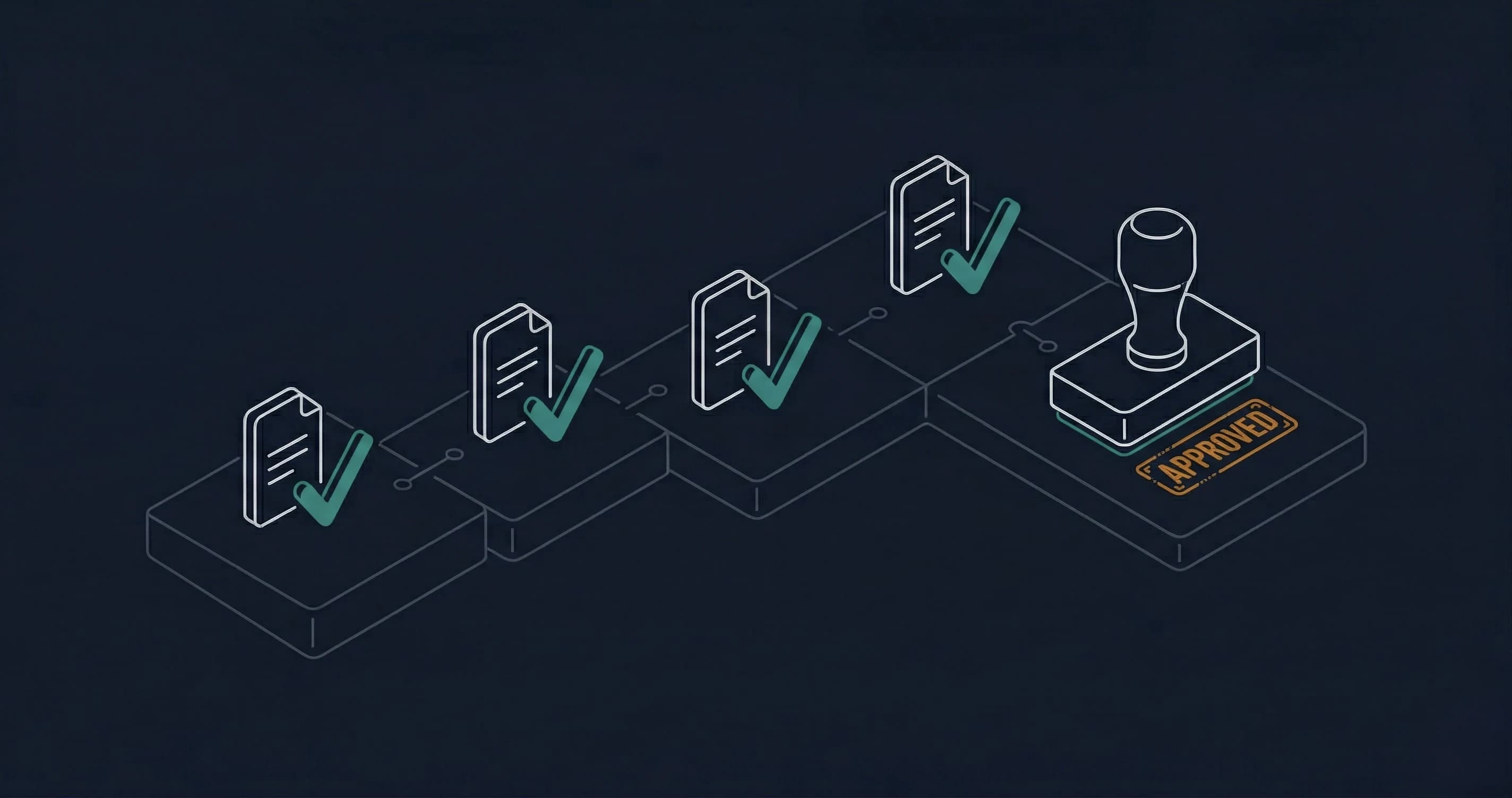
How to reduce audit prep time with execution-native controls
A practical framework to move from scattered evidence to audit-ready process runs.
Compliance leaders·11 min·March 10, 2026
Compliance operations
The week before an audit is when you find out whether your controls actually ran, or just lived in a policy document. Most teams find out the hard way. Work was completed. Boxes were checked. But when auditors ask for evidence, the answer is: 'let me go dig through email.'
Stop treating evidence as a separate phase. When collection is pushed to quarter-end, your team spends days on inbox searches, spreadsheet reconstruction, and version arguments that didn't need to happen.
Design controls directly in the workflow: approvals by role, due dates tied to SLA risk, mandatory evidence fields for anything high-stakes. Not as an extra step, as the step.
One audit trail per run. Who executed, what was approved, when exceptions were logged, what was attached. All of it in one timeline. That's the difference between reconstruction and retrieval.
The fastest wins are almost always three things: approval gates for critical tasks, required attachments for policy evidence, and overdue alerts tied to a named owner. Start there.
Template in Cadenio
GDPR/CCPA Compliance Audit
End-to-end privacy audit covering scope, data inventory, DSAR readiness, consent records, DPA review, cross-border transfers, breach-notification readiness, gap analysis, CAPA, and DPO sign-off. Jurisdiction (EU/US/Both) drives different obligations.
Pull the top 4 controls from your last audit report, those are your starting templates.
Add mandatory evidence fields to every high-risk step, not just the ones that previously failed.
Define approver roles (not people's names) so the process survives turnover.
Set SLA alerts before deadlines, not after, give owners 48 hours of warning.
Next step
Pick one recurring control process your team runs this month. Before it starts, add an evidence field and an approval gate to the highest-risk step. Time how long evidence retrieval takes after the run closes, that's your before-and-after baseline.