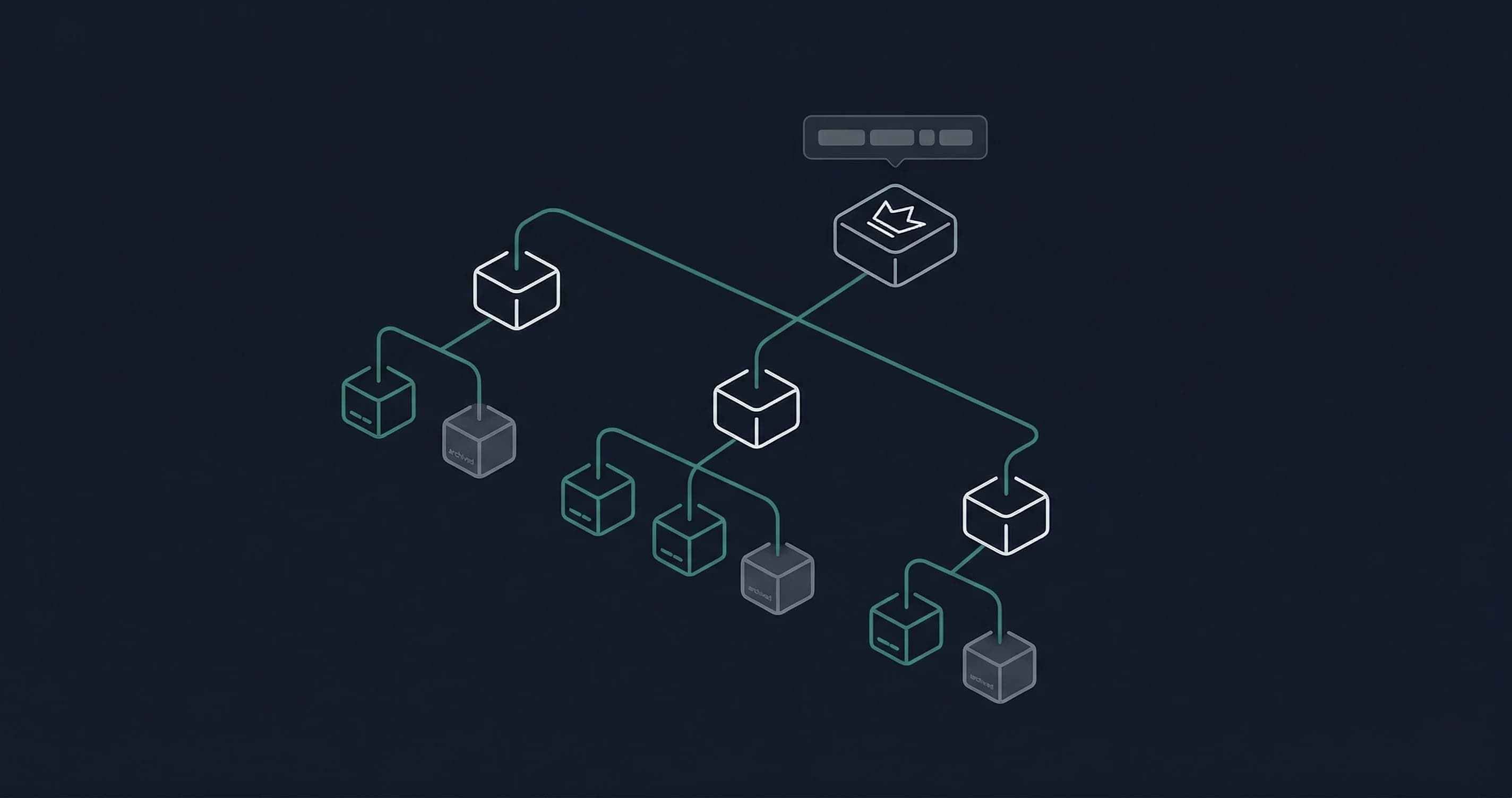
Template sprawl is a governance problem, not a tooling problem. Without lifecycle standards, teams clone workflows and drift from compliant execution. The tool is rarely the issue. The absence of standards always is.
Most governance failures happen when ownership is unclear. Every canonical template should have one accountable owner and one backup owner. Two people. That's the whole model. It sounds obvious until you realize most organizations can't name either person for their most-used templates.
Use a three-layer model: canonical templates owned by process managers, local variants owned by team leads, and clear promotion rules from local to canonical. The promotion path matters more than most teams realize, without it, good local improvements die locally.
Here's what governance failure actually looks like in practice: a critical process gets cloned fourteen times across teams, each version slightly different, no owner willing to consolidate. An auditor asks which version was running during a specific quarter. Nobody can answer with confidence. That's not a theoretical risk. That's a real audit finding.
Add template versioning with release notes. Teams need to know what changed, why it changed, and whether adoption is mandatory. Ambiguity on that last point causes more silent drift than anything else.
A monthly governance review for your top templates by usage and exception rate is the enforcement cadence that keeps the library from aging silently. Any canonical template not reviewed in 90 days is a governance risk item, full stop.
The goal is not perfect templates. It's templates that stay trustworthy as teams grow, people leave, and processes evolve. Autonomy without accountability produces sprawl. Accountability without autonomy produces templates nobody uses.